What is the right age to achieve something in life? Is 40 years, too little time, or adequate time to achieve something in life? Let us consider the lives of five luminaries of the 19th century who were more or less contemporaries and who became world-renowned figures in their short lifespans. Let’s start with Swami Vivekananda, an Indian Hindu monk, a spiritual guru and a literary luminary, lifespan 12 January 1863- 4 July 1902, a total of 39 years. Then you have the American writer Edgar Allan Poe, who was born on 19 January 1809 and died on 7 October 1849, a life span of 40 years, followed by the French writer Guy De Maupassant, born on 5 August 1850 and passed away on 6 July 1893, a life span of 42 years. On the rostrum, there is also Nikolai Gogol, a Russian writer of Ukrainian origin. He was born on 20 March 1809 and he died on 21 February 1852, a life span of 42 years. And last but not least, we have Anton Pavlovich Chekhov, a Russian playwright and short-story writer born on 29 January 1860, and he died on 15 July 1904, at the age of 44. They all left behind a phenomenal legacy of success and heaps of lessons for future generations within the ebbs and flows of their limited lifespan.
The mean life expectancy in the 19th century was 40-45 years. Global life expectancy today is around 72 years. There are two offshoots to this. One, the subject authors lived for around ninety to a hundred per cent of the average life expectancy of those times. Two, they only lived for a minus-plus of some forty years – a period, perhaps, too short for any milestone achievement, barring sports and maybe some other careers. When we compare 40 years with today’s life expectancy, it is only 55%. So then, does life expectancy have anything to do with your major achievements? The case study of the quintet doesn’t say so. There are authors, poets, and literary figures from other countries too, who gained fame but died very young, prominent among them is John Keats, to cite an example, who died at the age of 25. So, isn’t it ironic that some in a short lifespan of 25-40 years made gigantic strides, while others couldn’t manage to do that even in a century?
In the 19th century, when these five were alive, they witnessed watershed changes in their countries. Some major events were as follows: India had the First War of Independence in 1857. The British East India Company was replaced by the British Crown in 1858. Russia had the Crimean War between 1853 and 1856; the Caucasian War, between 1817 and 1864; and the capture of Tashkent by the Russian Army in 1865. In addition, Alaska was sold to the US in 1867; the Russian-Turkish War happened in 1877, and the Russian famine in 1891. Alexander III, the emperor of Russia, passed away in 1894, and the first congress of the Russian Social Democratic Labour Party (RSDLP) was held in 1898 in Minsk, now in Belarus. In America and Europe, slavery was abolished through an act; the First and Second Industrial Revolutions, which overlapped with the 18th and 20th centuries, respectively, led to massive urbanisation. Construction of the Suez Canal commenced in 1859, linking the Mediterranean Sea with the Indian Ocean through the Red Sea, providing a more direct shipping route between Europe and Asia. The Islamic gunpowder empires (Ottoman Empire, Safavid and the Mughal) were formerly dissolved, and European imperialism brought much of South Asia, Southeast Asia and almost all of Africa under colonial rule. It was also marked by the collapse of the Spanish, Zulu Kingdom, First French Empire, Holy Roman and the Mughal Empire.
Even with all the hullabaloo in their country and continent, there was calm and composure in these five lit luminaries. They had a single focus, just like Arjuna’s concentration – the eye of the fish, and that was to keep writing till their last breath. Though born in a Bengali Kayastha family in Calcutta, Swami Vivekananda was inclined towards spirituality. He was influenced by his guru, Ramakrishna, from whom he learnt that all living beings were an embodiment of the divine self. Therefore, service to God could only be rendered by service to mankind. Anton Chekhov, even when he fell sick in 1885, kept writing till he died of tuberculosis in 1904. Some of them even had financial problems, leading to trying times to obtain education, and some even had to support their education by writing scripts for magazines and even by selling fish. Edgar Allan Poe was born in Boston, the second child of actors David and Elizabeth Poe. His father abandoned the family in 1810, and his mother died the following year. He became an orphan, yet he fought back to become one of the most formidable writers of short stories. When Maupassant was 11, his mother, an independent-minded woman, divorced her husband. Afterwards, Maupassant lived with his mother, who was the single biggest influence on him, but that entailed hardships. Gogol lost his father at the age of fifteen, yet he aspired to become a writer.
The short lifespan of these great writers only teaches us that achievements are not a function of your age.
Shravan Charity Mission is an NGO that works for poor children suffering from life-threatening diseases, especially cancer. Our posts are meant for our readers, including children and adults, and have a huge variety of content. We also accept donations for our mission. Should you wish to donate to the cause of cancer? The bank details are given below:
What is the right age to achieve something in life? Is 40 years, too little time, or adequate time to achieve something in life? Let us consider the lives of five lit luminaries of the 19th century who were more or less contemporaries and who became world-renowned figures in their short lifespans. Let’s start with Swami Vivekananda a Hindu monk, a spiritual guru and a literary-luminary, lifespan 12 January 1863- 4 July 1902, a total of 39 years. Then you have the American writer Edgar Allan Poe, who was born on 19 January 1809 and died on 7 October 1849, a life span of 40 years, followed by the French writer Guy De Maupassant, born on 5 August 1850 and passed away on 6 July 1893 a life span of 42 years. On the rostrum, there is also Nikolai Gogol, a Russian writer of Ukrainian origin, who was born on 20 March 1809 and died on 21 February 1852, a life span of 42 years. And last but not least we have Anton Pavlovich Chekhov, a Russian playwright and short-story writer born on 29 January 1860, and died on 15 July 1904, at the age of 44. They all left behind a phenomenal legacy of success and heaps of lessons for future generations within the ebbs and flows of their limited lifespan.
The mean life expectancy in the 19th century was 40-45 years. Global life expectancy today is around 72 years. There are two off-shoots to this. One, the subject authors lived for around ninety to hundred per cent of the average life expectancy of those times. Two, they only lived for around forty years – a period, perhaps, too less for any milestone achievement, barring sports and maybe some other careers. When we compare 40 years with today’s life expectancy, it is only 55% in terms of years. The point then is: Does life expectancy have anything to do with your major achievements in life? The case study of the quintet doesn’t say so. There are authors, poets, and literary figures from other countries too, who gained fame but died very young, prominent among them is John Keats to cite an example who died at the age of 25. So, isn’t it ironic that some in a short lifespan of 25 to 40 years made gigantic strides, while others couldn’t manage to do that even in a century?
In the 19th century, these five authors witnessed watershed changes in their countries. Some major events were as follows: India had the First War of Independence in 1857. British East India Company was replaced by the British Crown in 1858. Russia had the Crimean War between 1853 and 1856; the Caucasian War, between 1817 and 1864; and the capture of Tashkent by the Russian Army in 1865. In addition, Alaska was sold in a sale in 1867; the Russian-Turkish War happened in 1877, and the Russian famine in 1891. Alexander III the emperor of Russia passed away in 1894, and the first congress of the Russian Social Democratic Labour Party (RSDLP) was held in 1898 in Minsk now in Belarus. In America and Europe, slavery was abolished through an act; the First and Second Industrial Revolutions which overlapped with the 18th and 20th centuries respectively led to massive urbanization. Construction of the Suez Canal commenced in 1859, linking the Mediterranean Sea with the Indian Ocean through the Red Sea, providing a more direct shipping route between Europe and Asia. The Islamic gunpowder empires (Ottoman Empire, Safavid and the Mughal) were formerly dissolved and the European imperialism, brought much of South Asia, Southeast Asia and almost all of Africa under colonial rule. It was also marked by the collapse of the Spanish, Zulu Kingdom, First French Empire, Holy Roman and the Mughal Empire.
Even with all the hullabaloo in their country and continent, there was calm and composure in these five lit luminaries. They had a single focus, just like the Arjuna’s concentration – the eye of the fish and that was – to keep writing till their last breath. Though born in a Bengali Kayastha family in Calcutta, Swami Vivekananda was inclined towards spirituality. He was influenced by his guru, Ramakrishna, from whom he learnt that all living beings, were an embodiment of the divine self. Therefore, service to God could only be rendered by service to mankind. Anton Chekhov even when he fell sick in 1885, kept writing till he died of tuberculosis in 1904. Edgar Allan Poe was born in Boston, the second child of actors David and Elizabeth Poe. His father abandoned the family in 1810, and his mother died the following year. He became an orphan yet he fought back to become one of the most formidable writers of short stories. When Maupassant was 11, his mother, an independent-minded woman, divorced her husband. Afterwards, Maupassant lived with his mother, who was the single biggest influence on him, but that entailed hardships. Gogol lost his father at the age of fifteen, yet he aspired to become a writer.
The short lifespan of these great writers only teaches us that achievements are not a function of a long lifespan.
Shravan Charity Mission is an NGO that works for poor children suffering from life-threatening diseases, especially cancer. Our posts are meant for our readers, including children and adults, and have a huge variety in content. We also accept donations for our mission. Should you wish to donate to the cause? The bank details are given below:
NAME OF ACCOUNT: SHRAVAN CHARITY MISSION
Account no: 680510110004635 (BANK OF INDIA)
IFSC code: BKID0006805
*
Kamlesh Tripathi’s Publications
GLOOM BEHIND THE SMILE
(The book is about a young cancer patient. Now archived in 8 prestigious libraries of the US which include Harvard College Library; Harvard University Library; Library of Congress; University of Washington, Seattle; University of Minnesota, Minneapolis; Yale University, New Haven; University of Chicago; University of North Carolina, at Chapel Hill University Libraries. It can also be accessed at MIT through Worldcat.org. Besides, it is also available for reading in libraries and archives of Canada; Cancer Aid and Research Foundation Mumbai; Jaipuria Institute of Management, Noida, India; Shoolini University, Yogananda Knowledge Center, Himachal Pradesh and Azim Premzi University, Bangalore).
ONE TO TANGO … RIA’S ODYSSEY
(Is a book on ‘singlehood’ about a Delhi girl now archived in Connemara Library, Chennai and Delhi Public Library, GOI, Ministry of Culture, Delhi; It is also available for reading in the Indian National Bibliography, March 2016, in the literature section, in Central Reference Library, Ministry of Culture, India, Belvedere, Kolkata-700022)
AADAB LUCKNOW … FOND MEMORIES
(Is a fiction written around the great city of Nawabs—Lucknow. It describes Lucknow in great detail and also talks about its Hindu-Muslim amity, which is the undying characteristic of Lucknow. The book was launched at the Lucknow International Literary Festival in 2014. It is included for reading in Askews and Holts Library Services, Lancashire, U.K; Herrick District Library, Holland and Charlotte-Mecklenburg Library, Mecklenburg County in North Carolina, USA; Black Gold Cooperative Library Administration, Arroyo Grande, California; Berkeley Library, University of California).
REFRACTIONS … FROM THE PRISM OF GOD
(Co-published by Cankids–Kidscan, a pan India NGO and Shravan Charity Mission, that works for child cancer in India. The book is endorsed by Ms Preetha Reddy, MD Apollo Hospitals Group. It was launched at the Lucknow International Literary Festival in 2016).
TYPICAL TALE OF AN INDIAN SALESMAN
(Is a story of an Indian salesman who is, humbly qualified. Yet he fights his way through unceasing uncertainties to reach the top. A good read not only for salesmen. The book was launched on 10th February 2018 at Gorakhpur Lit-Fest. Now available on Amazon, Flipkart and Onlinegatha)
RHYTHM … in poems
(Published in January 2019. The book contains 50 poems. The poems describe our day-to-day life. A few poems from the book have been published in Shillong Times, Bandra Times and Bhavan’s Journal. The book is available on Amazon, Flipkart and Onlinegatha)
MIRAGE
(Published in February 2020. The book is a collection of eight short stories available on Amazon, Flipkart and Notion Press)
AWADH ASSAM AND DALAI LAMA … The Kalachakra
(The story of the man who received His Holiness The Dalai Lama and his retinue in 1959 as a GOI representative when he fled Tibet in 1959. The book was launched on 21st November 2022 by His Holiness The Dalai Lama at Dharmshala. The title is archived in the library of the Department of Information and International Relations (DIIR) Government of Tibet, Tibet Policy Institute (TPI) and the personal library of His Holiness The Dalai Lama. The title is also archived in The Ohio Digital Library, USA. It was recently included in the digital library of the world-renowned company APPLE).
BHAVANS JOURNAL
Short stories, Book reviews and Articles published in Bhavan’s Journal: 1. Reality and Perception, 15.10.19; 2. Sending the Wrong Message, 31.5.20; 3. Eagle versus Scholars June, 15 & 20, 2020; 4. Indica, 15.8.20; 5. The Story of King Chitraketu, August 31 2020; 6. Breaking Through the Chakravyuh, September 30 2020. 7. The Questioning Spouse, October 31, 2020; 8. Happy Days, November 15, 2020; 9. The Karma Cycle of Paddy and Wheat, December 15, 2020; 10. Power Vs Influence, January 31, 2021; 11. Three Refugees, March 15, 2021; 12. Rise and Fall of Ajatashatru, March 31, 2021; 13. Reformed Ruler, May 15, 2021; 14. A Lasting Name, May 31, 2021; 15. Are Animals Better Teachers? June 16, 2021; 16. Book Review: The Gram Swaraj, 1.7.21; 17. Right Age for Achievements, 15.7.21; 18. Big Things Have Small Beginnings, 15.8.21; 19. Where is Gangaridai?, 15.9.21; 20. Confront the Donkey Within You 30.9.21; 21. Know Your Strengths 15.10.21; 22. Poverty 15.11.21; 23. Top View 30.11.21; 24. The Bansuriwala 15.1.22; 25. Sale of Alaska 15.2.22; 26. The Dimasa Kingdom 28.2.22;27. Buried Treasure 15.4.22; 28. The Kingdom of Pragjyotisha 30.4.22; 29. Who is more useful? 15.5.22; 30. The White Swan from Lake Mansarovar 30.6.22; 31. Bhool Bhulayya 15.9.22; 32. Good Karma 30.9.22; 33. Good Name vs Bad Name 15.10.22; 34. Uttarapath—The Grand Trunk Road 1.12.22; 35. When Gods Get Angry 1.1.23; 36. Holinshed’s Chronicles 15.1.23; 37. Theogony 15.2.23; 38. Poem: Mother 14.5.23; 39. THE NAG MANDIR 30.6.23; 40. The Story of Garuda 30.7.23; 41. Janmabhoomi vs Karmabhoomi 31.8.23; 42. The Ghost Town of Kuldhara 15.9.23; 43. The Tale of Genji 15.10.23; 44. The Soul Connection 1.12.23; 45.Book review: Jungle Nama … a story of the Sundarban 16.3.24; 46. Book review: A Forgotten Chapter 16.5.24;
THE SHILLONG TIMES
ARTICLES & POEMS: 1. POEM: HAPPY NEW YEAR 8.1.23; 2. POEM: SPRING 12.3.23; 3. POEM: RIGHT AND WRONG 20.3.23; 4.THE GUSH OF EMOTION—WRITING, 26.3.23; 5. THE NAG MANDIR, 7.5.23; 6. POEM:MOTHER 7.5.23; 7. POEM: RAIN RAIN 9.7.23; 8. POEM:YOU COME ALONE YOUGO ALONE 6.8.23; 9. RAIN RAIN (SECOND TIME) 10.8.23; 10. POEM: GURU TEACHER 10.8.23; 11. POEM: AUTUMN … THE INTERIM HEAVEN 15.10.23; 12. POEM: HAPPY DIWALI 12.11.23; 13. OVERCOMING BLINDNESS: LEARN IT THE JOHN MILTON WAY 10.12.23; 14. THE HAPPY PRINCE AND THE HAPPY MAN’S SHIRT 31.12.23; 15. ANNUS MIRABILIS 2024 7.1.24; 16. GANDHI TO MAHATMA GANDHI- Incidents that Shaped Gandhi in South Africa 28.1.24; 17. POEM: TOGETHER BUT NOT MADE FOR EACH OTHER, 11.2.24; 18. THE BIRDS BEES AND THE SPIDERS OF NICHOLAS GUILDFORD AND JONATHAN SWIFT 25.2.24; 19. THE OVERCOATS OF NIKOLAI GOGOL AND RUSKIN BOND 10.3.24; 20. THE ETHNIC COLOURS OF HOLI 24.3.24; 21. A LESSON FROM DALAI LAMA, 21.4.24; 22. POEM: MORNING WALK 28.4.24; 23. TRIP TO RHINE FALLS, SWITZERLAND, 19.5.24;
THE ASSAM TRIBUNE
ARTICLE: 1. THE MAGIC OF READING 11.12.23; 2. GANDHI TO MAHATMA 29.1.24; 3. GEOGRAPHY OF SOLITUDE 8.4.24; 4. A LESSON FROM DALAI LAMA, 22.4.24; 5. A SOURCE OF INSPIRATION, 29.4.24; 6. THE FOUR-LEGGED LIBRARY, 12.5.24;
29.12.2020: INDICA BY MEGASTHENES; 14.3.22: ABOUT THE DIMASA KINGDOM ASSAM; 10.12.22: GRAND TRUNK ROAD-UTTARAPATH; 5.10.23: THE GHOST TOWN OF KULDHARA NEAR JAISALMER;
(ALL THE ABOVE BOOK TITLES ARE AVAILABLE FOR SALE ON AMAZON, FLIPKART AND OTHER ONLINE STORES OR YOU COULD EVEN WRITE TO US FOR A COPY)
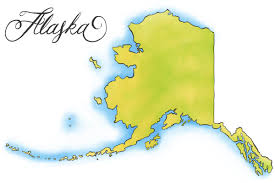
Flora and fauna are generally visible in the treasures of mother earth whereas, mines and minerals need to be dug out, in other words they need to be discovered. To simplify, what is overt is known to all. But what is covert needs to be discovered. “No great discovery was ever made without a bold guess.” said Isaac Newton. That brings me to the story of Alaska. The purchase of Alaska or the sale of Alaska was, United States’ acquisition of Alaska from the Russian Empire. Alaska was formally transferred to the United States on October 18, 1867, through a treaty ratified by the United States Senate and signed by President Andrew Johnson.
History corroborates that Russia had established a considerable presence in North America during the first half of the seventeenth century, but few Russians ever settled in Alaska. In the aftermath of the Crimean War, Emperor Alexander II of Russia began exploring the possibility of selling Alaska, as it would have been difficult to defend it from Britain and other countries in the event of any future war. After the end of the American Civil War, U.S. Secretary of State William Seward entered into negotiations with Russian minister Eduard de Stoeckl for the purchase of Alaska. Seward and Stoeckl both agreed to a treaty on March 30, 1867. The treaty was approved by the United States Senate by a wide margin despite clashes between President Johnson and Congress over the sanity of its purchase.
The purchase of Alaska added 586,412 square miles (1,518,800 km2) of new territory to the United States for the cost of $7.2 million. Say 2 cents per acre. Reactions to the purchase in the United States were mostly positive, as many believed possession of Alaska would serve as a base to expand and facilitate American trade into Asia. However, some opponents labelled the purchase as “Seward’s Folly“, or “Seward’s Icebox,” as they contended that the United States had acquired useless land mass that’ll not be of much use to the US in times to come.
But Seward could prophesy. Or he could measure the future potential of Alaska and its future usefulness in the opportunities arising in the US. He knew Alaska’s potential and could visualise how USA will benefit with Alaska’s resources and strategic position in the globe. Over the decades, exploration led to the discovery of gold, oil and rich minerals, along with the world’s most abundant fisheries. And so decades later, Seward was posthumously vindicated.
In the summer of 1899, gold was finally struck around Nome in west Alaska. That brings me to the point: Check what lies underground. For what lies underground could just be another gold mine just as Alaska. And on hindsight when we look back we find both, the Secretary of the State, William Seward and the United States of America, look like outright heroes, as compared to the Russian minister Eduard de Stoeckl and Russia itself who look pale in front of them.
In world history there have been many instances even after 1867 (when America purchased Alaska), where countries have divested their territories in settlement of disputes, and rogue countries have grabbed territories of civilised countries, names of which are pretty obvious and are available in history texts. And why go anywhere else. Even India, was partitioned on the ground of religion, which the citizenry of India has not been able to reconcile to even after seventy years. But the case of Alaska was truly different where an Emperor on the possibility of a future war divested Alaska-then part of the North American Continent for a pittance without studying what lies underground.
This conveys an important lesson to our posterity and that is, underground is as important as over ground. Metaphorically also, what lies in our innate conscience is equally important to your external personality.
Shravan Charity Mission is an NGO that works for poor children suffering from life threatening diseases especially cancer. Our posts are meant for our readers that includes both children and adults and it has a huge variety in terms of content. We also accept donations for our mission. Should you wish to donate for the cause. The bank details are given below:
NAME OF ACCOUNT: SHRAVAN CHARITY MISSION
Account no: 680510110004635 (BANK OF INDIA)
IFSC code: BKID0006805
*
Our publications
GLOOM BEHIND THE SMILE
(The book is about a young cancer patient. Now archived in 7 prestigious libraries of the US, including, Harvard University and Library of Congress. It can also be accessed in MIT through Worldcat.org. Besides, it is also available for reading in Libraries and archives of Canada and Cancer Aid and Research Foundation Mumbai)
ONE TO TANGO … RIA’S ODYSSEY
(Is a book on ‘singlehood’ about a Delhi girl now archived in Connemara Library, Chennai and Delhi Public Library, GOI, Ministry of Culture, Delhi)
AADAB LUCKNOW … FOND MEMORIES
(Is a fiction written around the great city of Nawabs—Lucknow. It describes Lucknow in great detail and also talks about its Hindu-Muslim amity. That happens to be its undying characteristic. The book was launched in Lucknow International Literary Festival of 2014)
REFRACTIONS … FROM THE PRISM OF GOD
(Co-published by Cankids–Kidscan, a pan India NGO and Shravan Charity Mission, that works for Child cancer in India. The book is endorsed by Ms Preetha Reddy, MD Apollo Hospitals Group. It was launched in Lucknow International Literary Festival 2016)
TYPICAL TALE OF AN INDIAN SALESMAN
(Is a story of an Indian salesman who is, humbly qualified. Yet he fights his ways through unceasing uncertainties to reach the top. A good read not only for salesmen. The book was launched on 10th February, 2018 in Gorakhpur Lit-Fest. Now available in Amazon, Flipkart and Onlinegatha)
RHYTHM … in poems
(Published in January 2019. The book contains 50 poems. The poems describe our day to day life. The book is available in Amazon, Flipkart and Onlinegatha)
MIRAGE
(Published in February 2020. The book is a collection of eight short stories. It is available in Amazon, Flipkart and Notion Press)
(ALL THE ABOVE TITLES ARE AVAILABLE FOR SALE IN AMAZON, FLIPKART AND OTHER ONLINE STORES OR YOU COULD EVEN WRITE TO US FOR A COPY)
This is only an attempt to create interest in reading. We may not get the time to read all the books in our lifetime. But such reviews, talk and synopsis will at least convey what the book is all about.
Going Rogue—An American Life (2009) is a personal and political memoir by politician Sarah Palin, former governor of Alaska and 2008 Republican candidate for U.S. Vice President on the ticket with Senator John McCain. She wrote this wonderful book with Lynn Vincent.
The book became a New York Times #1 bestseller in its first week of release, and remained there for six weeks. It is one of the four political memoirs published since the 1990s to sell more than two million copies.
Let me comment on this book more from an Indian perspective—Kafi dil khol kar likha hai Sarah Palin ne is kitab ko—She has really poured her heart into this book. What, she could, really bring out, is how, the political grid, of the U.S works. And within that, how American politicians, operate. Sarah belongs to Alaska and boy-oh-boy what a vivid description she has given of Alaska. Its mind boggling. She perhaps hasn’t left any aspect of Alaska untouched—be it oil, pipeline, gold, snow and the caribou. Sitting here in India one thinks Alaska is but cold cold and cold and nothing more, but Sarah Palin has showcased Alaska, the biggest state of the US in its full glory and elements.
Although the book is a thick marathon spine of—some 341 pages and that too the big ones 6 x 9 inches, yet you won’t feel like keeping it aside, as the narration, only keeps, cheeringly swishing, all along. It’s a happening book. It’s a moving book and so is the life of Sarah Palin. Price of the book is 16$.
It’s a narration that every Indian politician should read. It gives a hands on account of how election campaigns are conducted in the US. Their value system—and why America is America. It dwells deep into Sarah Palin’s personal life. How she balances between career, home, children and the rub-off of these on politics and vice-versa.
Sarah is a mother of five children, youngest was born, when she was, the governor of Alaska, with down-syndrome. But she knows how to fight it out. She is blessed with a gentleman husband Todd, who is full of understanding. Her eldest son is in the army posted in Iraq. In the book she is extremely transparent about her family and her views and doesn’t mince words. She is against teen pregnancies yet she supports her daughter when she conceives and is in the family way. The piece on election campaign is superbly written.
The book has six chapters:
The Last Frontier
Kitchen-Table Politics
Drill, Baby Drill
Going Rogue
The Thumpin
The Way Forward followed by Epilogue, A view from Alaska by Dewey Whetsell, Afterword and Acknowledgments
Delving deeper. On September 3, 2008, Alaska Governor Sarah Palin gave a speech at the Republican National Convention that electrified the nation and instantly made her one of the most recognizable women in the world. As chief executive of America’s largest state, she had built a record as a reformer who cast aside politics-as-usual and pushed through changes other politicians only talk about: Energy independence. Ethics reform. And the biggest private sector infrastructure project in U.S. history. While revitalizing public-school funding and ensuring the state met its responsibilities to seniors and Alaska Native populations, Palin also beats the political “good ol’ boys club” at their own game and brought Big Oil to heel.
In this eagerly anticipated memoir, Palin paints an intimate portrait of growing up in the wilds of Alaska, meeting her lifelong love, her decision to enter politics, the importance of faith and family, and the unique joys and trials of life as a high-profile working mother. She also opens up for the first time about the 2008 presidential race, providing a rare mom’s-eye view of high-stakes national politics—from patriots dedicated to “Country First” to slick politicos bent on winning at any cost. Going Rogue traces one ordinary citizen’s extraordinary journey, and imparts Palin’s vision of a way forward for America and her unfailing hope in the greatest nation on earth.
Writing process
The book deal was announced in May 2009 when Palin was still Governor of Alaska. She said that she wanted the public to hear her true story, “unrestrained and unfiltered”. She reportedly received an advance of $1.25 million from publisher Harper Collins, with two projected additional payouts of between $2.5 million and $5 million each.
Palin announced that although she would have a ghostwriter to help, she would be doing a lot of the writing herself, employing her journalism skills and the personal diaries and notes that she had kept throughout her life. Critics questioned whether Palin could write a book.
Responding to concerns that writing and promoting the book would interfere with her duties as governor, Palin said she would only work on the book after working hours and would promote the book whenever she has the rightful opportunity. The Alaska law department issued a legal opinion which okayed the project, stating: “A book publication project is compatible with your position as governor so long as it does not interfere with your official duties”.
Conservative journalist and author Lynn Vincent worked on the book with Palin for several weeks shortly after she resigned the governorship in the summer of 2009. Palin met with HarperCollins editors for intensive editing sessions in New York City. HarperCollins publisher Jonathan Burnham said that Palin had been “unbelievably conscientious and hands-on at every stage”, adding that the book was “her words, her life … in full and fascinating detail”.
The publisher attributed completion of the memoir early to Palin’s devoting full-time to the writing process after she left office. A paperback version of the book, with new material, was released on August 24, 2010.
The first part of the book is devoted to Palin’s life before the 2008 campaign; the second part details her life as a candidate for national office. The book is written in a personal tone similar to Palin’s manner of speaking. Palin discusses the disagreements she had with campaign advisers of her running mate John McCain, criticizes the national media, and talks about the importance of religion and family life.
The “Going Rogue” part of the title refers to criticism leveled at Palin by McCain campaign advisers that she was straying from their carefully crafted message and publicly disagreeing with McCain on several issues. The subtitle, “An American Life”, mirrors the title of President Ronald Reagan’s 1990 autobiography.
Palin ends the book by quoting her own father saying, “Sarah’s not retreating, she’s reloading.”, suggesting she would return to public life.
Shravan Charity Mission is an NGO that works for poor children suffering from life threatening diseases especially cancer. Our posts are meant for our readers that includes both children and adults and it has a huge variety in terms of content. We also accept donations for our mission. Should you wish to donate for the cause. The bank details are given below:
NAME OF ACCOUNT: SHRAVAN CHARITY MISSION
Account no: 680510110004635 (BANK OF INDIA)
IFSC code: BKID0006805
*
Our publications
GLOOM BEHIND THE SMILE
(The book is about a young cancer patient. Now archived in 7 prestigious libraries of the US, including, Harvard University and Library of Congress. It can also be accessed in MIT through Worldcat.org. Besides, it is also available for reading in Libraries and archives of Canada and Cancer Aid and Research Foundation Mumbai)
ONE TO TANGO … RIA’S ODYSSEY
(Is a book on ‘singlehood’ about a Delhi girl now archived in Connemara Library, Chennai and Delhi Public Library, GOI, Ministry of Culture, Delhi)
AADAB LUCKNOW … FOND MEMORIES
(Is a fiction written around the great city of Nawabs—Lucknow. It describes Lucknow in great detail and also talks about its Hindu-Muslim amity. That happens to be its undying characteristic. The book was launched in Lucknow International Literary Festival of 2014)
REFRACTIONS … FROM THE PRISM OF GOD
(Co-published by Cankids–Kidscan, a pan India NGO and Shravan Charity Mission, that works for Child cancer in India. The book is endorsed by Ms Preetha Reddy, MD Apollo Hospitals Group. It was launched in Lucknow International Literary Festival 2016)
TYPICAL TALE OF AN INDIAN SALESMAN
(Is a story of an Indian salesman who is, humbly qualified. Yet he fights his ways through unceasing uncertainties to reach the top. A good read not only for salesmen. The book was launched on 10th February, 2018 in Gorakhpur Lit-Fest. Now available in Amazon, Flipkart and Onlinegatha)
RHYTHM … in poems
(Published in January 2019. The book contains 50 poems. The poems describe our day to day life. The book is available in Amazon, Flipkart and Onlinegatha)
(ALL THE ABOVE TITLES ARE AVAILABLE FOR SALE IN AMAZON, FLIPKART AND OTHER ONLINE STORES OR YOU COULD EVEN WRITE TO US FOR A COPY)


 Shravan charity mission