Copyright@shravancharitymission
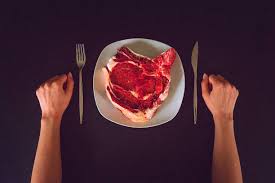
MEAT FOR THOUGHT: WHY 100 BN ANIMALS DIE EVERY YEAR …. THE SCALE OF ANIMAL SLAUGHTER FOR FOOD IS UNSUSTAINABLE. MAY BE, JUST MAYBE, SCIENCE WILL FIND A WAY…..
The global demand for animal protein is growing fast. That demand has been met by a sharp increase in meat and fish production. Animal farming has grown to the point that almost a third of all land is used for raising livestock. This, in turn, has increased carbon emissions. The most jarring statistic is that to meet this demand, 900,000 cows, 1.4 million goats, 1.7 million sheep, 3.8 million pigs, 12 million ducks and 202 million chickens are slaughtered daily for human consumption, per FAO 2021 data. Add to that, fish consumed – an average of 211 million killed daily, by one estimate. Caveat: fish sticks, production and consumption are reported in tonnes, so the number of fish killed daily has various estimates. Annually, close to 100 billion farmed animals are killed worldwide for human consumption. The scale at which meat is farmed is unsustainable on several fronts, not least for the environmental impact. The numbers are an eye-opener. Over 70% of bird biomass is poultry livestock. Poultry outweighs wild birds by a factor of more than 3 to 1. It’s worse for mammals. Almost 95% of global mammal biomass, excluding humans, is livestock. Livestock outweigh wild mammals by a factor of 15 to 1. The world is getting weighed down by the need for meat. And the global population of farmed animals is not only a driver of climate change but also its victim.
PRESSURE ON LAND: About 45% of the world’s habitable land is used for agriculture. Crops are grown on just a third of this; the rest of it is mostly grazing land. Just half of the cropland is grown for crops that humans consume. The other half is used to grow crops for animal feed, biofuels, etc. In short, the majority of the world’s cropland is used to raise livestock for meat and dairy. Worse, animal feed is largely monoculture crops, which results in soil degradation.
RISK OF DISEASE: As demand increases, farms that ‘grow’ cows, chickens and pigs face their own challenges. Burgeoning populations mean animals are packed close together, often in cramped and unhygienic conditions. This is a direct risk for epidemic-level viruses to spread. The African swine fever (ASF) is estimated to have killed one in four pigs worldwide since it was first detected in 2018, and has a 100% case fatality rate. FAO’s 2023 outlook noted that the global impact of ASF resulted in a dip in demand for pork and its products, accompanied by a rise in demand for poultry.
ANTIBIOTIC RESISTANCE: There is excessive use of antibiotics in livestock farming, especially poultry. This leads to antibiotic resistance. Animals are often given antibiotics routinely to promote growth and prevent illness in their crowded conditions. Such overuse allows antibiotic-resistant bacteria to thrive and spread. These resistant bacteria pass from livestock to humans via food. This impacts how we respond to life-saving antibiotics if we fall ill.
CHAOTIC CLIMATE: Weather extremes impact all farming. But the loss to animals is not given due recognition. Freak storms, floods and forest fires burn farms, killing livestock. Heavy rains and floods in East Africa in June not only devastated cropland but also killed almost 10,000 farm animals. Floods contaminated rivers, lakes and ponds from where fish are sourced. All of this has sparked fears of a food crisis.
EMISSIONS & MORE: The cattle industry is a significant contributor to greenhouse gases (GHGs), primarily through the production of methane from livestock digestion and manure management. Cattle belch large amounts of methane, a GHG more harmful than carbon dioxide. Additionally, deforestation for grazing land, fertiliser use, and fossil fuel consumption in meat production processes all generate substantial GHG emissions. Beef typically has the largest emissions, followed by lamb, pork, chicken, then eggs and fish. About 26% of global GHG emissions are from food: grains, pulses, dairy, meat, the works. Of this, livestock and fisheries contribute almost a third. As scientists, environmentalists, governments and civil society grapple with climate change, the focus is largely on curbing plastics, focusing on energy mix, on pollutants and development models, but as the human population booms, and meat-eating spreads faster, the impact of a plate of food cannot be ignored. So, what are the solutions? For sure, not for much longer can it be business as usual on the animal farm. It is essential to use science and technology to reconstruct and upgrade how meat is sourced.
EAT LESS: Less meat is nearly always better than current options of lab-grown meat, both for the environment and health, given that today’s lab-grown meat (single-cell cultures) falls not only in the highly processed foods category but also did not quite impress consumers once the initial novelty wore off. ENGINEER THE BIOLOGY: Called “cellular agriculture”, the essence of such tissue engineering is just that – farming cells and growing meat from them. The idea behind it, under research in labs across the world, is to grow meat from cells extracted from animal organs and grown in a lab. Pioneer and proponent of cellular agriculture, bioengineer Isha Datar argues that we already consume several such cell culture products – as vitamins, flavours and enzymes. If the question on meat is how to feed more using less land, without emitting GHGs and without killing animals, science will – must – provide the answer.
(TIMES OF INDIA 20/6/24) TEXT: NANDITA SENGUPTA. SOURCES: POORE & NEMECEK (2018), HANNAH RITCHIE, MAX ROSER (OUR WORLD IN DATA), TED CLIMATE.
Posted by Kamlesh Tripathi
Author, Poet, & Columnist
*
https://kamleshsujata.wordpress.com
*
Like it and Share it
*
Shravan Charity Mission is an NGO that works for poor children suffering from life-threatening diseases, especially cancer. Our posts are meant for our readers, including children and adults, and have a huge variety of content. We also accept donations for our mission. Should you wish to donate to the cause of cancer? The bank details are given below:
NAME OF ACCOUNT: SHRAVAN CHARITY MISSION
Account no: 680510110004635 (BANK OF INDIA)
IFSC code: BKID0006805
***
 Shravan charity mission